
Checking Criminal History in Carroll County
No single database contains every Carroll County criminal record. Begin with the kind of event you need to confirm. Iowa Courts Online is the broad first stop for a filed Carroll County case. The Clerk of District Court supplies documents, certified copies, older files, and help with entries that are not available online. The Carroll County Sheriff holds deputy investigative reports and records for people booked into the county jail. Carroll Police keeps reports for incidents within the city. Iowa DCI provides the statewide criminal-history product.
Use a full name, exact date of birth, spelling variants, and a case or report number when known. Match more than a name before relying on a result. Each source has a different job, so follow the record from the first report through the final court disposition.
- Search Iowa Courts Online with Carroll County selected and use a case number when one is known.
- Ask the Carroll County Clerk of District Court for a public filing, certified copy, or older case that is not downloadable.
- Request the incident or arrest report from the sheriff, Carroll Police, or the agency that made the record.
- Call the Carroll County Jail for current custody because the county does not publish a confirmed online roster.
- Order an Iowa DCI check when a statewide fingerprint-supported history is the right official product.
The official Carroll County homepage shows the courthouse identity and public business hours.
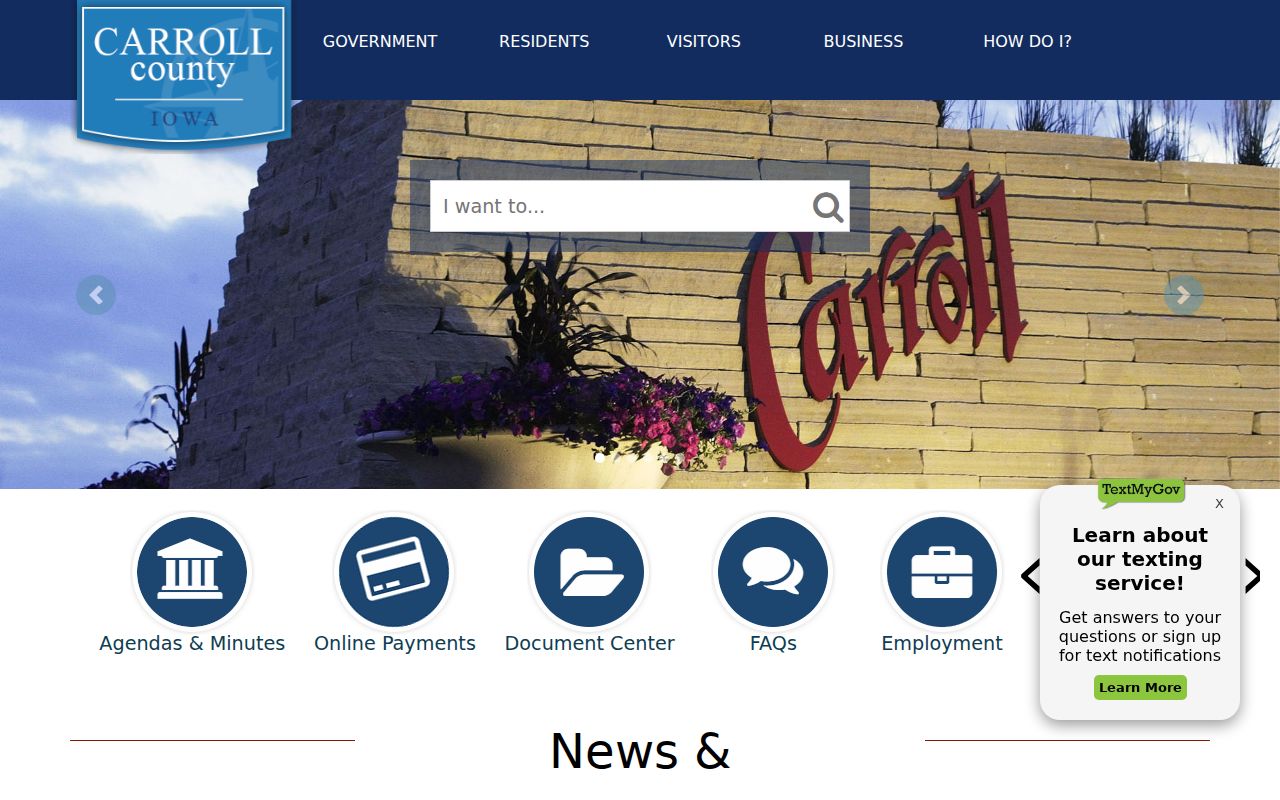
The courthouse is the shared physical starting point for the clerk, sheriff, jail, and several county counters, but each office keeps its own type of record.
Four Carroll County Record Custodians
A police report, jail booking, court file, and DCI history are related, but they are not duplicates. The arresting agency writes the event narrative. Carroll County Jail creates the intake and custody file. The county attorney decides what to charge, and the clerk creates the court docket. DCI receives fingerprint-linked arrest cycles and reported outcomes. A delay or omission at one stage can make the sources differ without proving that any one record is false.
| Custodian | Carroll County record | Best access route |
|---|---|---|
| Sheriff or city police | Incident and arrest report | Agency counter, phone, or chapter 22 request |
| Carroll County Jail | Booking and current custody | Jail phone or sheriff records request |
| Clerk of District Court | Filed charge, docket, order, and disposition | Iowa Courts Online or clerk counter |
| Iowa DCI | Releasable statewide criminal history | Online, mail, fax, email, or in person |
The county's official document center illustrates how Carroll County sorts public material by department.
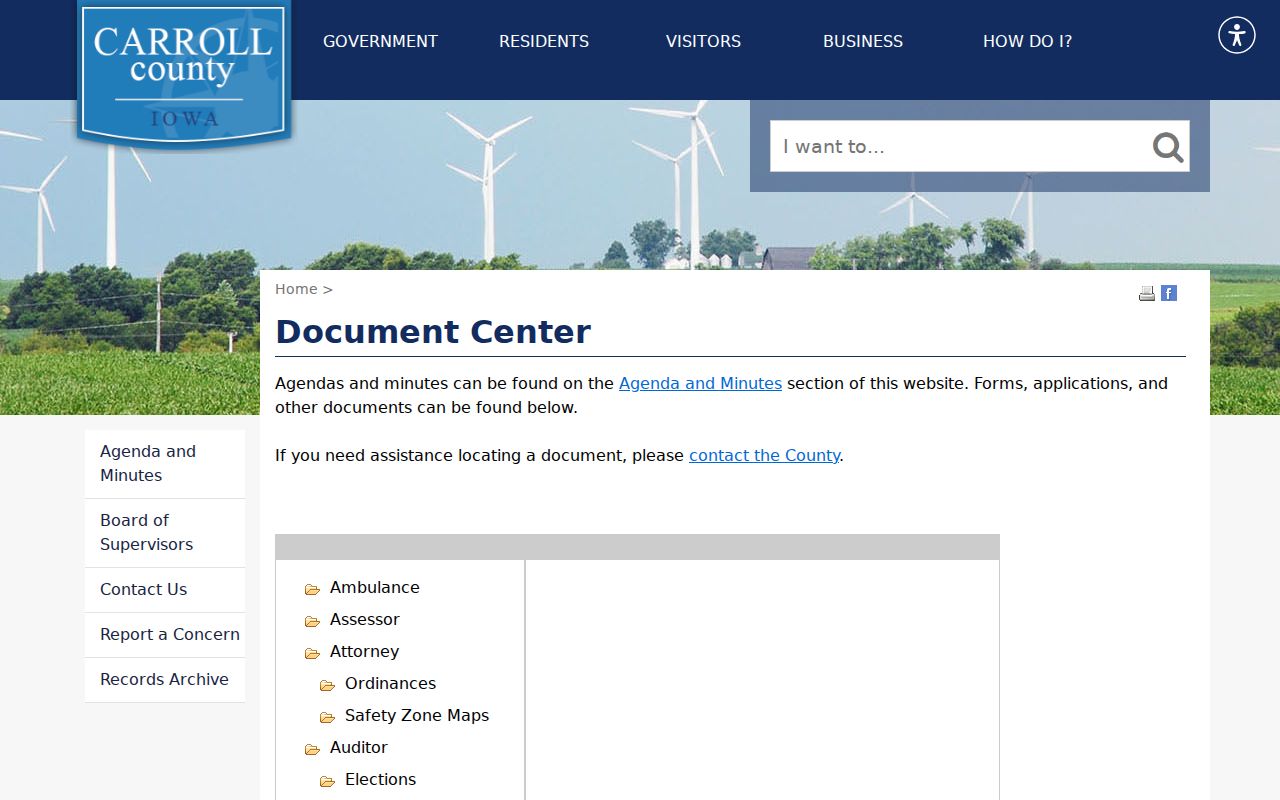
That archive is useful for county documents, but it is not a substitute for the Iowa District Court criminal docket or a sheriff record request.
Iowa Official Background Checks
The Iowa Department of Public Safety, Division of Criminal Investigation, is the central state repository. Any person may submit a name check. DCI requires first name, last name, and exact date of birth, and charges $15 for each last name searched. A middle name, sex, or Social Security number can help resolve similar names. A signed release changes what DCI may disclose, including information about a discharged deferred judgment.
DCI accepts requests online, by mail, fax, email, or in person. It does not take orders by phone. Mail, fax, and email processing is stated as one to three days based on volume and staff. Carroll County Jail offers weekday fingerprint capture, though its fee is not posted. Carroll Police offers walk-in fingerprinting on weekdays for $10 with no appointment. Fingerprint capture alone is not the completed check; the prints must go through the authorized DCI or FBI channel.
| Official product | Coverage | Known cost |
|---|---|---|
| Iowa DCI name check | Releasable Iowa repository history | $15 per last name |
| Carroll Police fingerprints | Print capture only | $10 |
| Carroll County Jail fingerprints | Print capture only | Confirm with sheriff |
| Iowa Courts Online | Filed Iowa cases and dockets | Basic public access is free |
The DCI criminal-history page lists the current forms, payment methods, and request channels.
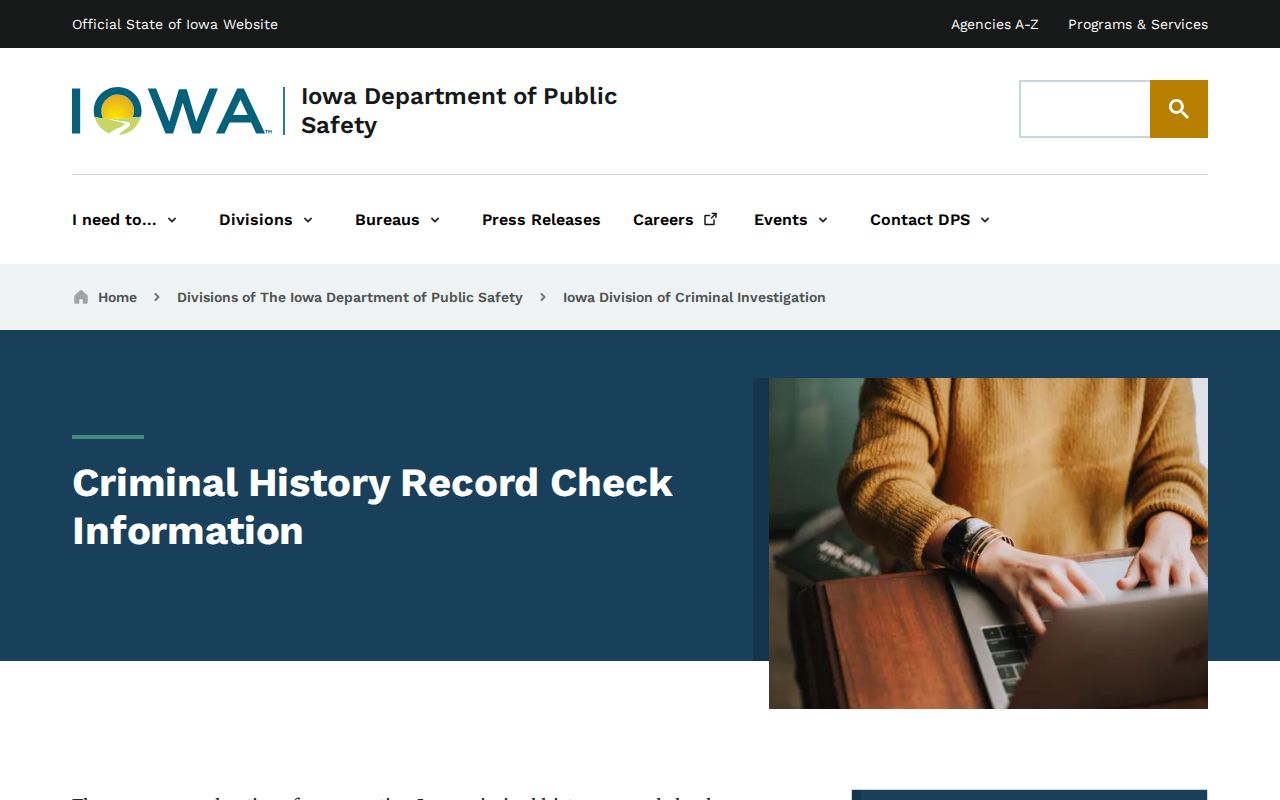
Use that live state page to confirm details before sending sensitive identifiers or payment.
Why DCI May Miss Carroll Arrests
DCI states that an arrest will not create a state criminal-history entry if fingerprints were not taken and submitted. That makes the repository strong for identity matching, but not complete for every local police contact. A Carroll County case may also exist while its disposition has not yet reached DCI. Conversely, one DCI response can combine fingerprint-supported events from several Iowa counties.
A response saying “No Iowa Criminal History Found” has three possible meanings in the state guidance: no record was found, available information is not releasable without authorization, or confidential juvenile information exists. It is not a certificate that no event ever occurred. Compare the response with Iowa Courts Online and the correct Carroll County agency. For your own disputed DCI result, contact the criminal-history unit; fingerprints may be requested to settle identity.
The DCI Support Operations Bureau describes the central repository and its fingerprint basis.
This repository layer should be read beside the local report and court file, not in place of them.
Note: A missing DCI entry does not erase a Carroll County agency report or a filed Iowa court case.
Carroll County Criminal Record Types
Each Carroll County criminal record answers a narrow question. An incident report describes what officers were told or observed. A booking record confirms intake and custody. A charging document states what the prosecutor filed. The court file tracks pleas, motions, orders, outcomes, and sentence. A DCI response organizes releasable fingerprint-supported history. Warrant, corrections, registry, juvenile, and expunged records have separate rules and custodians.
- Agency report: narrative, time, place, officers, alleged offense, and evidence, subject to lawful redaction.
- Booking file: intake time, charge at booking, bond, fingerprints, photograph, and custody data.
- Court case: formal charge, docket events, plea, disposition, sentence, and public financial entries.
- State history: DCI arrest cycles and reported dispositions linked through identity data and fingerprints.
- Corrections or registry entry: current status under the rules of IDOC, parole, probation, or chapter 692A.
Do not merge these into one “rap sheet.” A booking allegation may be declined or amended, while a court case can have both dismissed and convicted counts.
Carroll County Records for Ten Towns
The Carroll County Sheriff provides contracted policing for Arcadia, Breda, Dedham, Glidden, Halbur, Lanesboro, Lidderdale, Ralston, Templeton, and Willey, in addition to unincorporated areas. A reader should not search for a separate police records office in each contracted town. Start with the sheriff and give the precise town, address, date, and event. Carroll city has its own police department, while Manning and Coon Rapids requesters should first confirm which agency wrote the report.
A written Carroll County records request should state the record sought, date range, location, involved agency, and report or booking number if known. Ask for inspection or an electronic copy and request a cost estimate before copies are made. The county does not post a separate request form or a fixed sheriff copy fee. Active investigation details, juvenile material, protected victim information, medical data, and personal identifiers may be withheld or redacted.
The Iowa DPS contact directory identifies the state units that receive criminal-history and registry questions.
Use the sheriff for its local records and DCI for the state repository product so the request reaches the right custodian.
Inside a Carroll County Criminal Record
A Carroll County DCI history can show identity data, aliases, date of birth, a state identification number, arresting agency, submitted charges, dispositions, and sentence or custody information. A court record is built around the case number, county, charge code, parties, attorneys, docket events, orders, judgment, and money due. The jail file focuses on intake, custody, booking charges, bond, property, fingerprints, and photograph.
| Name and identifiers | Legal name, aliases, date of birth, and identity fields allowed in that product. |
|---|---|
| Arrest or booking | Agency, intake time, booking number, allegation, bond, and custody trail. |
| Charges and statutes | Filed or submitted counts, Iowa code section, class, and later amendments. |
| Disposition | Outcome for each count, such as dismissal, acquittal, plea, or conviction. |
| Sentence | Judgment terms, custody, probation, fines, costs, or restitution when public. |
| Supervision status | Public prison, parole, or probation status through IDOC and the court docket. |
Read charge, disposition, and sentence as separate fields. The same Carroll County case can show a filed count that was later amended and a different count that reached judgment.
Carroll County Warrant Record Fallbacks
Carroll County does not publish a confirmed public warrant list or search portal. Call the sheriff at (712) 792-4393 for its procedure, search Iowa Courts Online for public docket entries, and ask the Clerk of District Court about a known case. For a city citation or missed appearance, confirm the correct city and court channel. A chapter 22 request may seek releasable warrant data, but sealed or unexecuted warrants, juvenile matters, and active investigations may be withheld.
A warrant record may state a name, case number, issuing court, issue date, type, underlying charge, and bond. A bench warrant often follows a missed court date or disobeyed order. Arrest warrants rest on probable cause, while search warrants authorize a search and may stay sealed. No result on a public docket is not proof that no warrant exists.
If a warrant may be active: confirm the case with official staff, seek legal advice if desired, and arrange the proper court appearance or surrender rather than arriving without a plan.
Public Access Laws in Iowa
Carroll County follows the Iowa Open Records Law. Public records may be examined and copied unless another law makes the record or part of it confidential. The practical result is often redaction, not the loss of the whole file. Ask the sheriff for sheriff reports and bookings, the city police department for its reports, the clerk for court files, and DCI for statewide history. A denial should identify its legal basis.
Key Iowa laws:
Iowa Code §§22.2 and 22.7 grant public access while identifying confidential records and data.
Iowa Code §§692.2 and 692.3 govern criminal-history data and lawful DCI dissemination.
Iowa Code §232.147 restricts juvenile record access.
Iowa Code chapter 901C sets the state's limited expungement routes.
Public access does not make harassment, threats, identity misuse, or vigilant action lawful. Match the person and read the complete official outcome before drawing a conclusion.
Carroll County Jail and IDOC Records
The 52-bed Carroll County Jail holds local detainees and may house people for other counties. Custody there does not by itself establish where a case was filed. No confirmed online county roster was found. For present custody, call the sheriff at (712) 792-4393. Visitation reservations use (712) 792-4394 and must be made 24 hours ahead. The public booking sheet may also be requested under chapter 22.
Iowa Offender Search is the separate state route after a person enters IDOC custody or community supervision. Carroll County belongs to IDOC Second District, which handles probation, parole, pretrial supervision, presentence investigations, treatment court, intensive supervision, and other services. Compare the state status with the Carroll County sentencing docket for the charge and judgment.
The IDOC Second District page lists Carroll County among its 22 served counties and describes its current services.
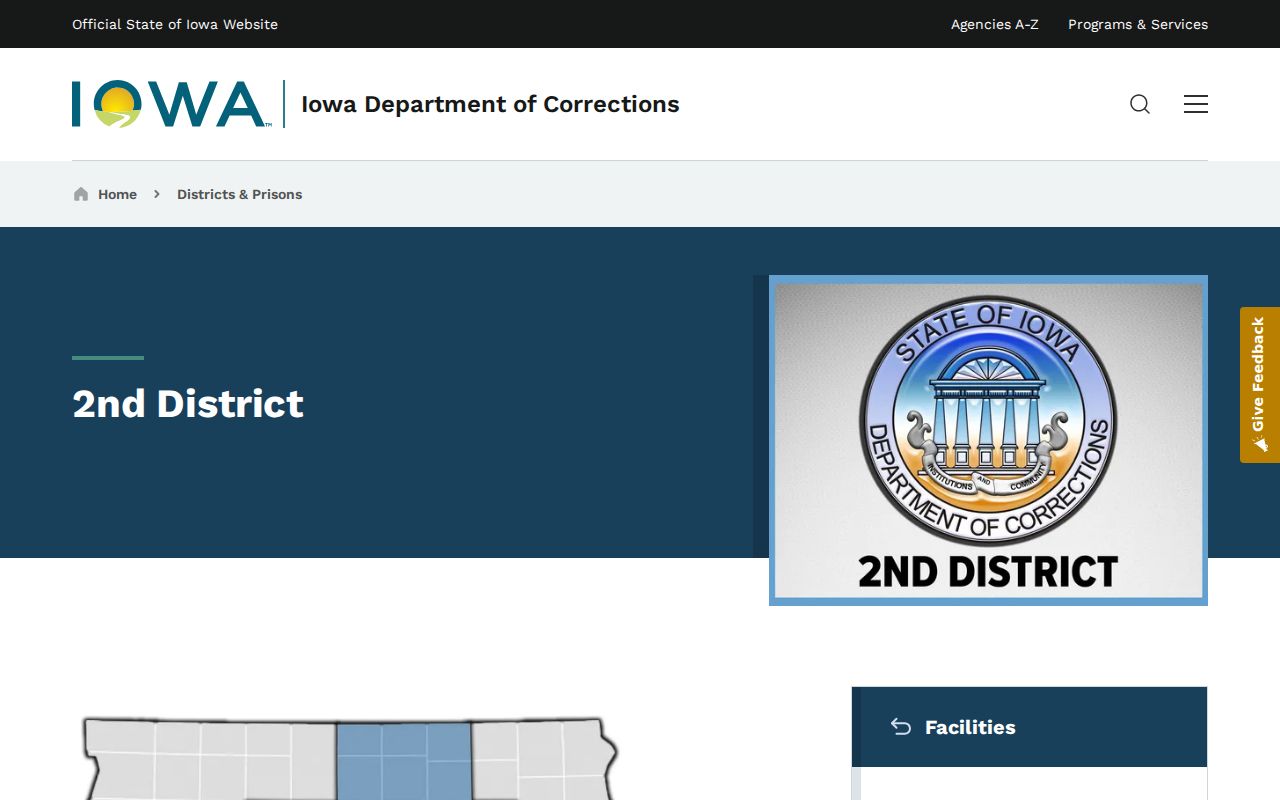
The district page supplies supervision context, while the clerk remains the source for the Carroll County judgment that imposed it.
Sealed, Expunged, and Restricted Records
Juvenile information, protected victim or minor identifiers, medical material, sealed warrants, active investigative details, and restricted court documents may not be publicly visible. A public docket can still contain a case shell even when a document is restricted. DCI also warns that confidential juvenile material can be one reason a name response says no Iowa history was found.
Iowa Code chapter 901C has separate routes for qualifying dismissals or acquittals and for one limited misdemeanor expungement. Conditions, waiting rules, offense exclusions, and court debt can matter. A discharged deferred judgment under chapter 907 is a distinct confidentiality process and should not be described as the same thing as chapter 901C expungement.
For a Carroll County case, identify the case and final outcome, select the current Iowa Judicial Branch form, and file under the original case number in the Iowa District Court for Carroll County. The research did not confirm a local filing fee, so ask the clerk. After an order, verify the clerk docket, DCI self-review, and arresting agency separately because updates need not occur at once.
Carroll County Vault Records Since 1886
Carroll County's courthouse history matters to anyone tracing an old criminal case. The county seat moved from Carrollton to railroad-platted Carroll City in 1869. A courthouse on the town square burned in 1886, yet the county says its vaults and records survived. Files were moved to temporary quarters before a stone-and-brick courthouse was built. The current courthouse opened in the 1960s, and the prior clock-tower bell remains on the grounds.
The official courthouse history documents the fire, surviving vault contents, and later courthouse construction.
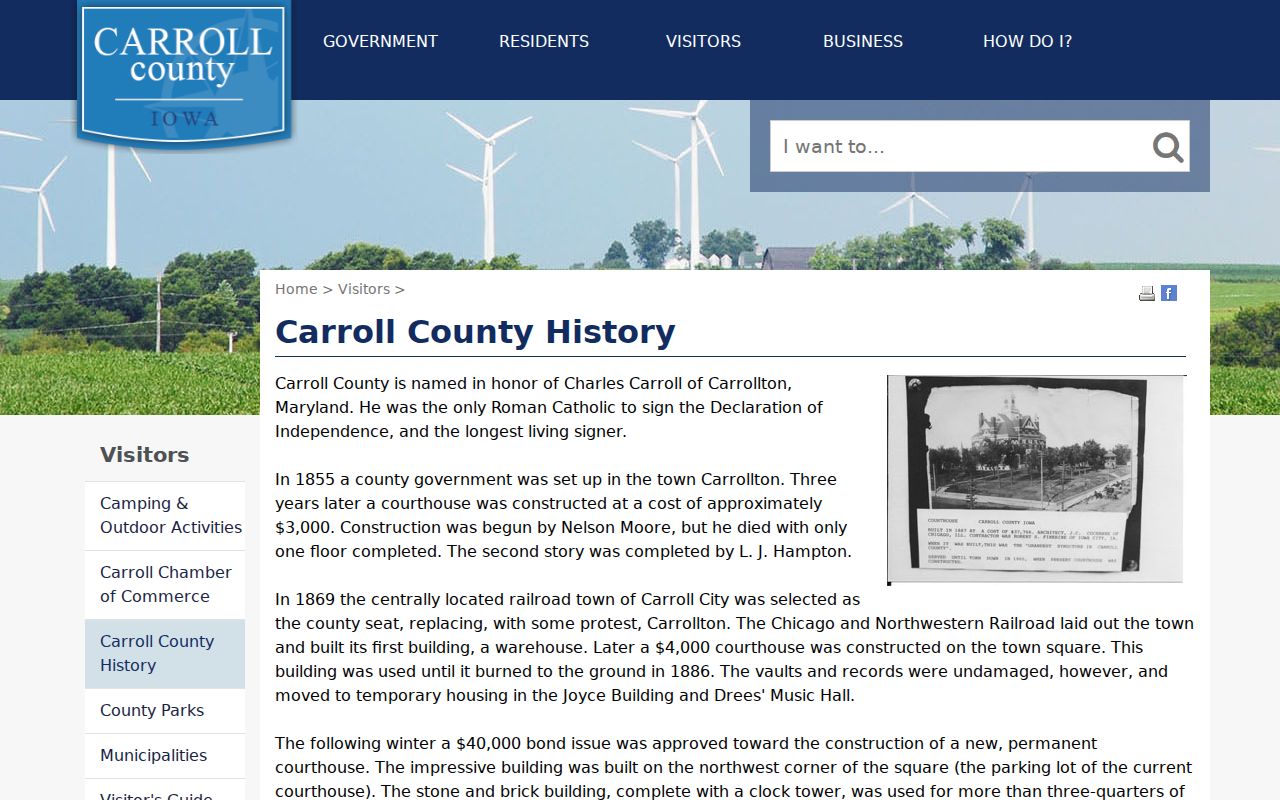
An older Carroll County record should not be assumed lost merely because it predates the present building. Give the clerk a name, approximate year, case type, and any old number so staff can determine whether an archived file must be retrieved.
Carroll County Corrections After Sentencing
Probation is ordered by the sentencing court. Parole decisions sit within Iowa's parole system, and field supervision is delivered through IDOC district operations. Iowa Offender Search can show a public status such as inmate, parolee, or probationer. It does not replace the Carroll County docket for charge details, the sentence order, or later public court action.
The Iowa Board of Parole is the official source for the state parole authority and its public information.
Read parole authority, district supervision, and the court judgment as connected but distinct parts of a Carroll County criminal record.
Carroll County Crime Data Context
Carroll Police publishes fiscal-year annual reports, which offer official local context without relying on a commercial safety score. Label the agency and reporting period before comparing totals. Small raw counts can produce large percentage swings from one year to the next, and a police report period is not the same as a court filing year. Countywide sheriff activity and city police activity also should not be blended unless the source does so.
The FBI Crime Data Explorer provides an official route to agency-level reported crime data and coverage notes.
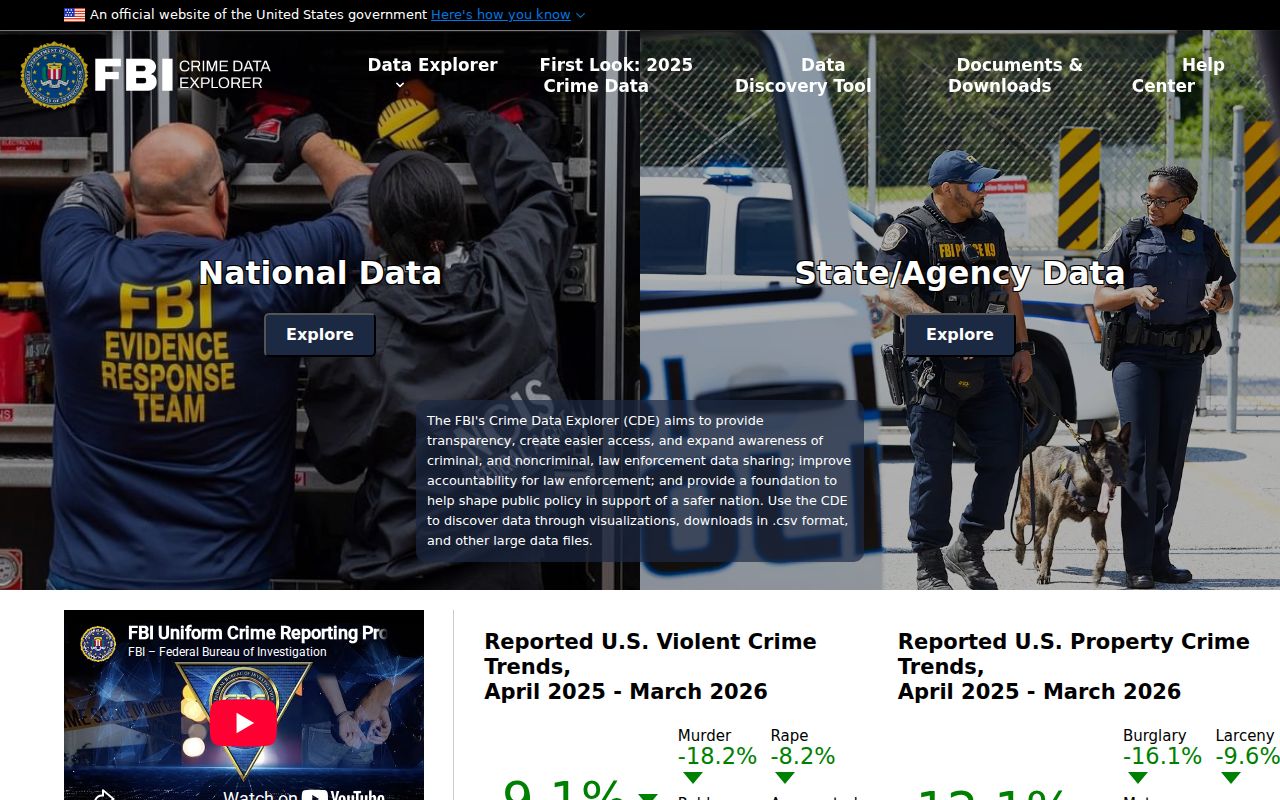
Crime totals describe reports to an agency, not the guilt of any person and not the full contents of the Carroll County court docket.
Carroll County Criminal Record Terms
Iowa case language can change how a Carroll County record should be read. A charge row is not an outcome, and a court status is not the same as current jail custody. These terms help keep each stage in its proper place.
- Trial information
- The Iowa prosecutor's formal charging document, often used instead of an indictment.
- Disposition
- The outcome of one charge or of the case, which may differ among counts.
- Deferred judgment
- A process in which judgment is deferred while conditions are completed, with special confidentiality effects after discharge.
- Expungement
- A limited statutory change to ordinary public access under Iowa Code chapter 901C.
- SID
- The state identification number associated with fingerprint-supported criminal history.
When the terms conflict across sources, use the court's final disposition for the judicial result and ask the source custodian to correct its own record.
Carroll County Criminal Records by City
Local records begin with the agency that served the place. Carroll has an independent police department. Manning and Coon Rapids readers should first use the official city contact to identify the report writer, then follow any booking to Carroll County Jail and any filed case to Iowa Courts Online. The three city pages keep that local routing distinct.
Carroll Criminal Records
County seat with its own police department, annual reports, and walk-in fingerprint service.
Manning Criminal Records
Start with the official city contact, then confirm the arresting agency and county court route.
Coon Rapids Criminal Records
Confirm the incident jurisdiction before tracing jail custody or a filed Carroll County case.
For the full county case trail, a city report is only the first layer. Booking, prosecution, and state history remain separate records.