
Checking Criminal History in Carroll
No single office holds a complete Carroll criminal record. Start with the city agency when the event occurred within Carroll’s limits, then follow the record to the county jail and Iowa District Court if an arrest led to custody or a filed case. The Carroll Police Department is the official source for its incident and arrest reports. Iowa Courts Online provides the filed court trail, while the Iowa Division of Criminal Investigation supplies a statewide repository check.
- Confirm that the event occurred inside Carroll and that Carroll Police created the report.
- Ask police for the specific incident or arrest report, using the date, place, report number, and exact record sought.
- Call Carroll County Jail when present custody or a booking sheet is the immediate concern.
- Search Iowa Courts Online with Carroll County selected, then ask the clerk for documents that are not online.
- Order a DCI check when a fingerprint-supported statewide Iowa history is needed.
Each step answers a different question. A police narrative does not prove a court outcome, and a court name search does not replace a DCI history. The broader Carroll County criminal-history overview explains those county and state layers in more depth.
Carroll Police and Sheriff Records
Carroll maintains its own police department, so an incident inside city limits usually starts with Carroll Police. The Carroll County Sheriff handles its own deputy reports, the jail, and contract policing for ten other communities. That split matters when a location is described only as “Carroll” or when an event occurred just beyond city limits. A request sent to the wrong office can be referred or delayed.
The official Carroll Police records source shows the department’s city role and its annual-report archive.
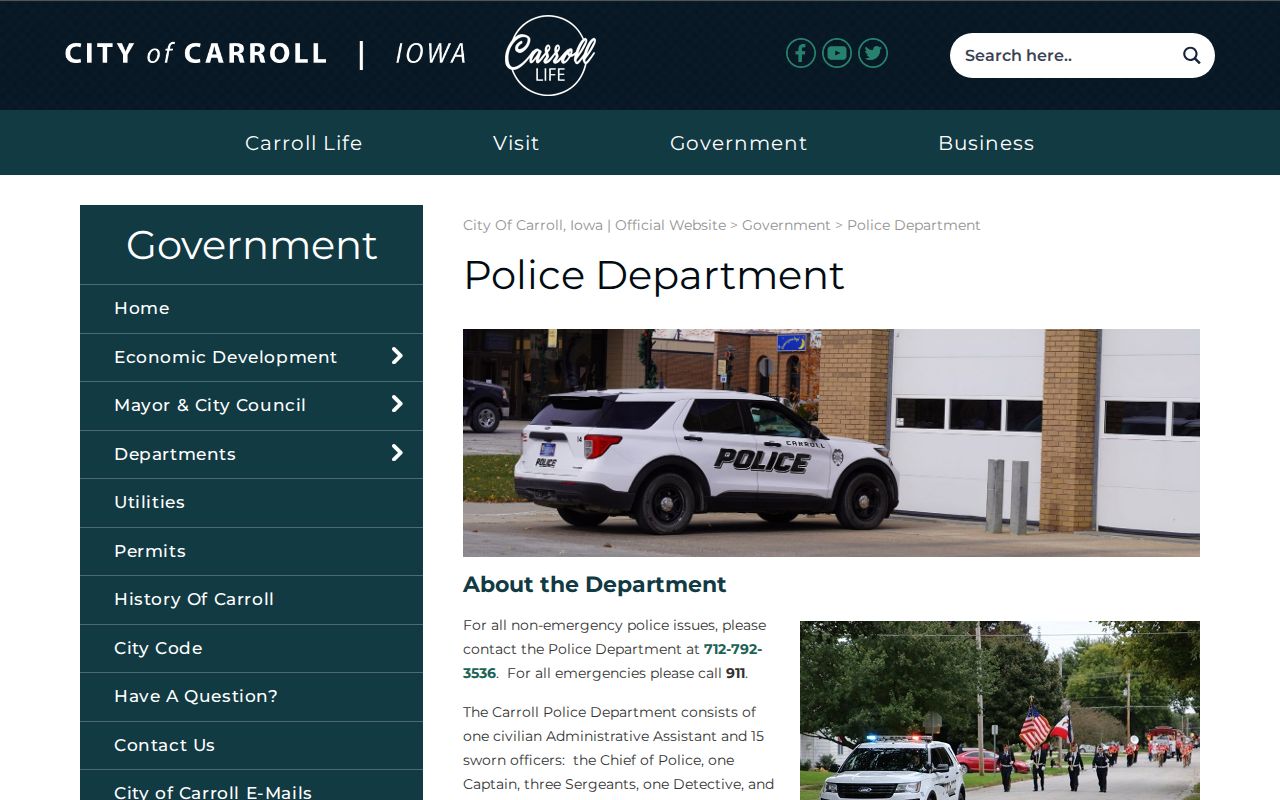
That source is the right starting point for Carroll incident files, but jail and court records still belong to county and state custodians.
| Record sought | First official source | What it establishes |
|---|---|---|
| City incident report | Carroll Police | Reported event and police investigation |
| Booking sheet | Carroll County Sheriff | Intake, booking charge, and bond |
| Filed criminal case | Clerk and Iowa Courts Online | Charges, docket, and disposition |
Carroll Police Department Records
Carroll Police keeps reports created by its officers. A useful request identifies the event date and time, precise location, involved person, known report number, the exact document wanted, and a preferred delivery method. The inspected police page did not expose a public incident-report request form or a city case portal. Requesters should confirm current identification rules, redactions, copy charges, and delivery options with the department rather than assume a fee or turnaround.
The department also posts fiscal-year annual reports. Those reports provide official context about police activity, but they are statistical summaries, not person-level arrest histories. A yearly total cannot tell whether a named person was arrested or how a court resolved a charge. Use them to understand reporting periods and local workload, not to infer guilt or risk from a single count.
Note: Carroll Police reports remain distinct from sheriff booking records and the clerk’s judicial case file.
Carroll Police Fingerprint Records
Carroll Police offers a concrete local fingerprint service: weekday walk-ins from 8 a.m. to 5 p.m., without an appointment, for $10. Fingerprint capture is not itself a criminal-history result. The prints must still go through the repository or authorized program that requested them. Before arriving, confirm acceptable identification, card stock, payment method, and whether the receiving program requires a special electronic route.
The official Census profile for Carroll provides the city context used for this records page.
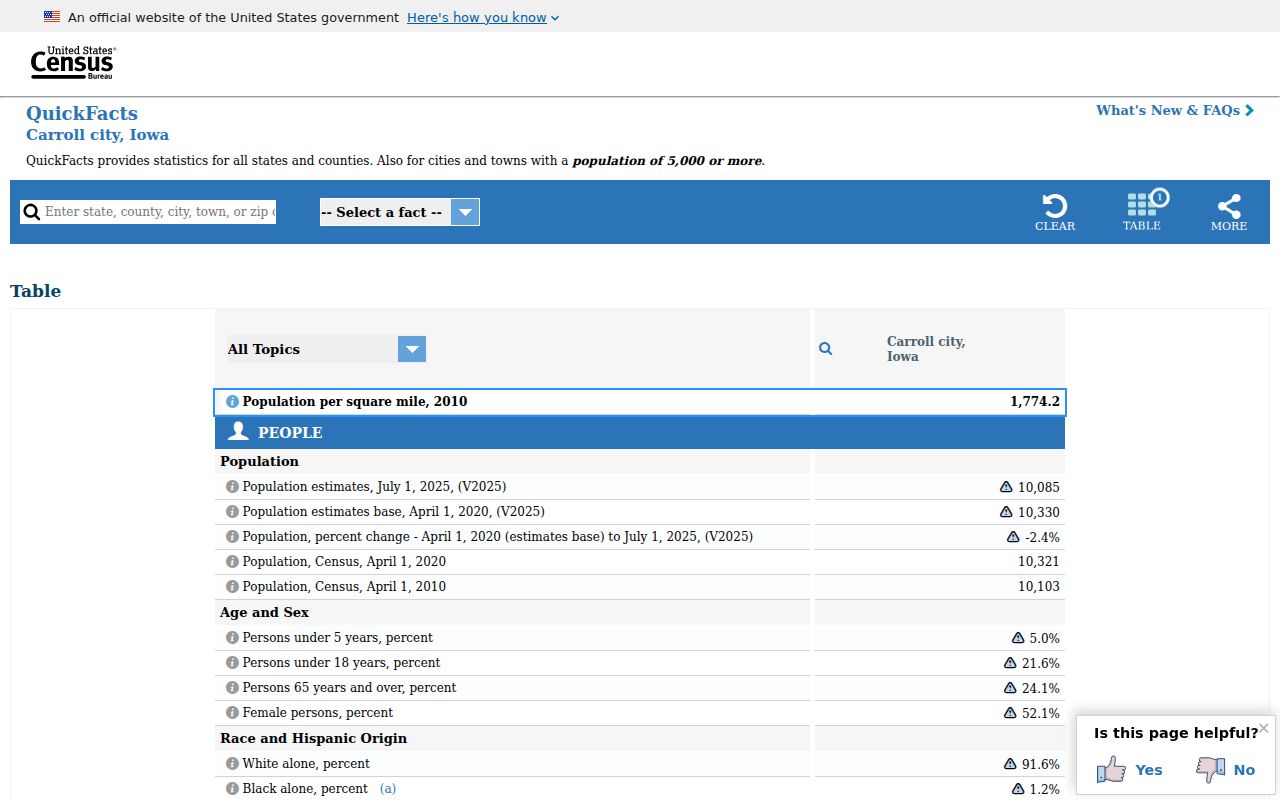
Carroll’s role as the county’s largest city helps explain why its police channel is separate from the sheriff route used elsewhere in the county.
For a statewide self-review, the Iowa DCI request requires at least a first name, last name, and exact date of birth. DCI charges $15 per last name. Iowa accepts online, mail, fax, email, and in-person requests, but not telephone orders. A signed release can change what the agency may disclose, including information about a discharged deferred judgment.
Carroll Arrests and Bookings
A Carroll Police arrest normally moves to Carroll County Jail at 114 E. 6th Street. The city police report describes the investigation and alleged offense. The jail then creates a separate custody record with intake details, arresting agency, booking charge, bond, fingerprints, photograph, and other intake material. Some medical, classification, victim, juvenile, and identifying data may be withheld.
Carroll County does not publish a confirmed online jail roster or daily booking log. For current custody, call the sheriff’s office at (712) 792-4393. The county’s chapter 22 open-records process can be used to seek a releasable booking sheet when a phone inquiry is not enough. The jail may house people for other counties, so a Carroll jail entry alone does not establish that Carroll County filed the prosecution.
After an arrest, Iowa procedure calls for an initial appearance before a magistrate within 24 hours. The filed charge can differ from the booking allegation. Read the court docket for the prosecutor’s charge and the later outcome.
Carroll Police Annual Record Context
Carroll Police publishes fiscal-year reports, including a FY2024-2025 year-end report. These official documents can support a careful look at trends when the same categories and reporting windows are compared. They should not be turned into a broad safety ranking. Raw counts, clear date labels, and coverage notes are more useful than a percentage detached from the size of the city or a change in reporting practice.
The Census place-estimate tables are the source for comparing Carroll with other incorporated places.

The estimate tables supply population context, while the police reports remain the official local source for agency activity counts.
Carroll’s directly displayed 2025 estimate is 10,085, compared with a 2020 Census count of 10,321. Residents age 65 or older make up 24.1 percent. Those facts support plain labels and accessible request instructions, not assumptions about crime.
Municipal Court Records in Carroll
Carroll has no separately confirmed municipal court portal. City ordinance, citation, misdemeanor, and felony matters route through Iowa’s unified District Court system when they become court cases. Search Iowa Courts Online with Carroll County selected, use the person’s name or an Iowa case number, and apply the criminal case type and date controls when available. The clerk is the next source for a filing that is listed but not downloadable.
| Court Name | Iowa District Court for Carroll County |
|---|---|
| Case Types Heard | Felonies, indictable and simple misdemeanors, traffic matters, and preliminary proceedings within Iowa’s unified system |
| Case Lookup Channel | Iowa Courts Online, followed by the Clerk of District Court for documents and certification |
| What the Docket Shows | Case number, parties, charges, events, status, orders, judgment, sentence, and exposed financial fields |
| Copies & Fees | Confirm current copy, certification, redaction, and archive charges with the clerk |
A name match should be checked against several non-sensitive details. One case may also contain dismissed and convicted counts, so each charge row needs its own reading.
Carroll Records Reach County Court
Police contact does not automatically become a court conviction. Carroll Police creates the report, the jail creates the booking file when custody occurs, and the Carroll County Attorney decides whether and what to charge. The clerk creates the court case only after a filing. This sequence explains why a very recent arrest may not yet appear in Iowa Courts Online and why the filed charge may differ from the police allegation.
The Iowa Department of Corrections open-records page shows the separate state correctional records channel.
That state channel applies after a person enters Iowa correctional custody or supervision, not to a new Carroll police report.
Where Carroll Records Go
Each custodian updates on its own schedule. A local report can exist before fingerprints reach the state repository, and a court case can show a disposition before another system posts the change. DCI warns that an arrest without submitted fingerprints will not create a state criminal-history record. A “no Iowa criminal history found” response can also reflect nonreleasable or juvenile information rather than proof that no event occurred.
Record flow: Carroll Police Department › Carroll County Jail and Iowa District Court › Iowa Department of Public Safety, Division of Criminal Investigation
For a new event, begin with police and jail. For the filed accusation and final result, use the court file. For an older statewide view, use DCI and compare it with the local sources if a disposition seems absent.
Carroll Record Expungement Checks
Iowa Code chapter 901C provides different paths for qualifying dismissals or acquittals and for a limited misdemeanor expungement. A discharged deferred judgment under chapter 907 is a related confidentiality mechanism, but it is not the same as destruction of every agency record. Eligibility turns on the exact charge, outcome, waiting rules, court debt, and statutory exclusions.
The official Iowa expungement statute supplies the controlling text.
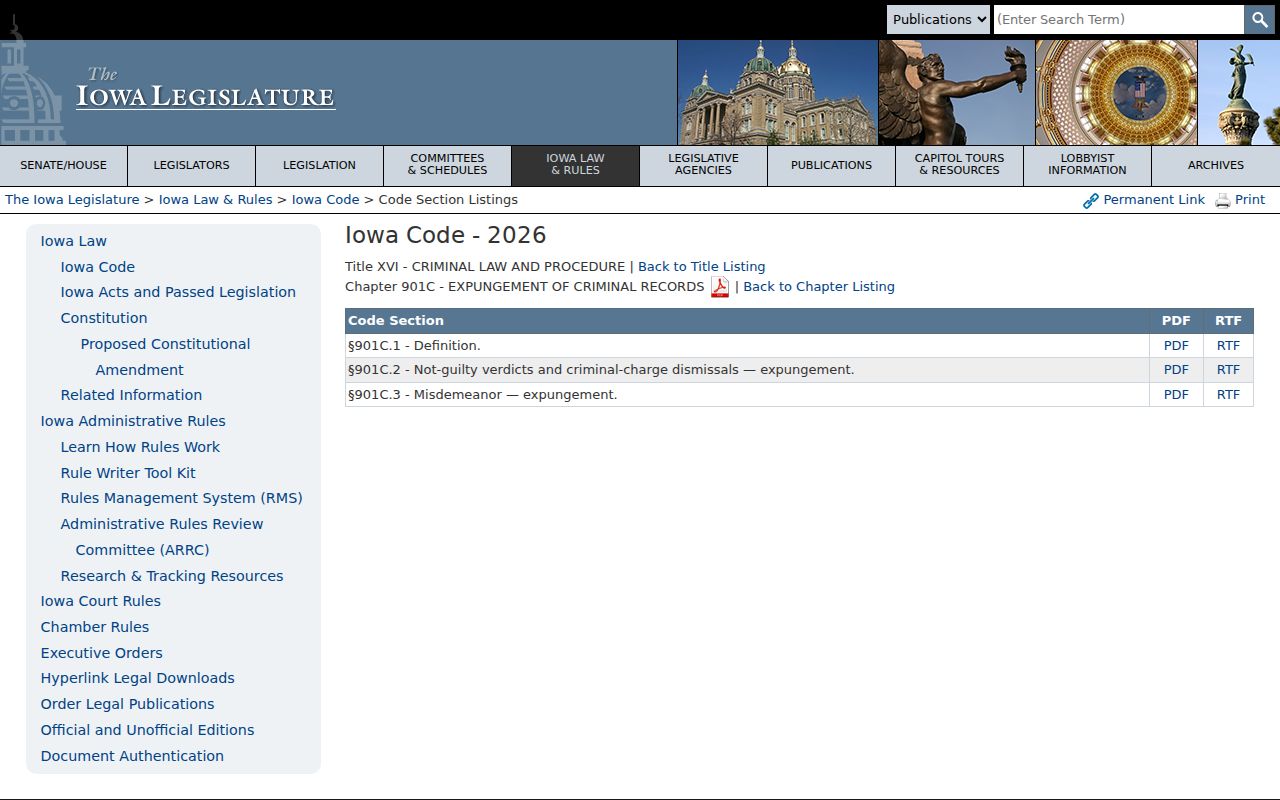
After an order, check the clerk, Iowa Courts Online, DCI, and the arresting agency separately because updates may not occur at the same time.
Start with the original Carroll case number and final disposition. Use the current Iowa Judicial Branch form, address any court debt, provide required notice, and wait for the judge’s order. The research did not confirm a local filing fee, so ask the clerk for the current amount and fee-waiver process.
Fixing a Carroll Record Mismatch
A name alone is weak proof, especially when an Iowa Courts Online search returns several people. Compare the county, case number, middle name, filing dates, counsel, and other lawful details before treating a result as the right person. Do not use protected identifiers gathered from an unrelated record. If the court entry appears wrong, contact the clerk with the case number and disputed field.
For a DCI discrepancy, request a self-review and provide a clear description of the suspected error. DCI may require fingerprints to resolve identity because its repository is fingerprint-supported. When a dismissed arrest still appears in an agency file, first confirm whether an expungement or confidentiality order actually covers that source. Then send the order and discrepancy to the custodian rather than assuming one court update erased all copies.
Public Access Rules in Carroll
Carroll Police and county custodians must apply Iowa’s open-records rules to the records they hold. Public portions may be inspected or copied, while active investigative details, juvenile information, victim data, medical material, protected identifiers, and restricted court documents may be withheld or redacted. A requester should ask for the legal basis when material is denied and may narrow a broad request to the specific public fields needed.
Key Statutes:
Iowa Open Records Law, chapter 22 gives every person access to public records subject to statutory confidentiality.
Iowa Code chapter 692 governs criminal-history data and lawful dissemination by DCI.
Iowa Code section 232.147 protects confidential juvenile records.
Public availability does not permit harassment, threats, identity misuse, or vigilantism. Verify the record with the office that created it before relying on a name match or an allegation.